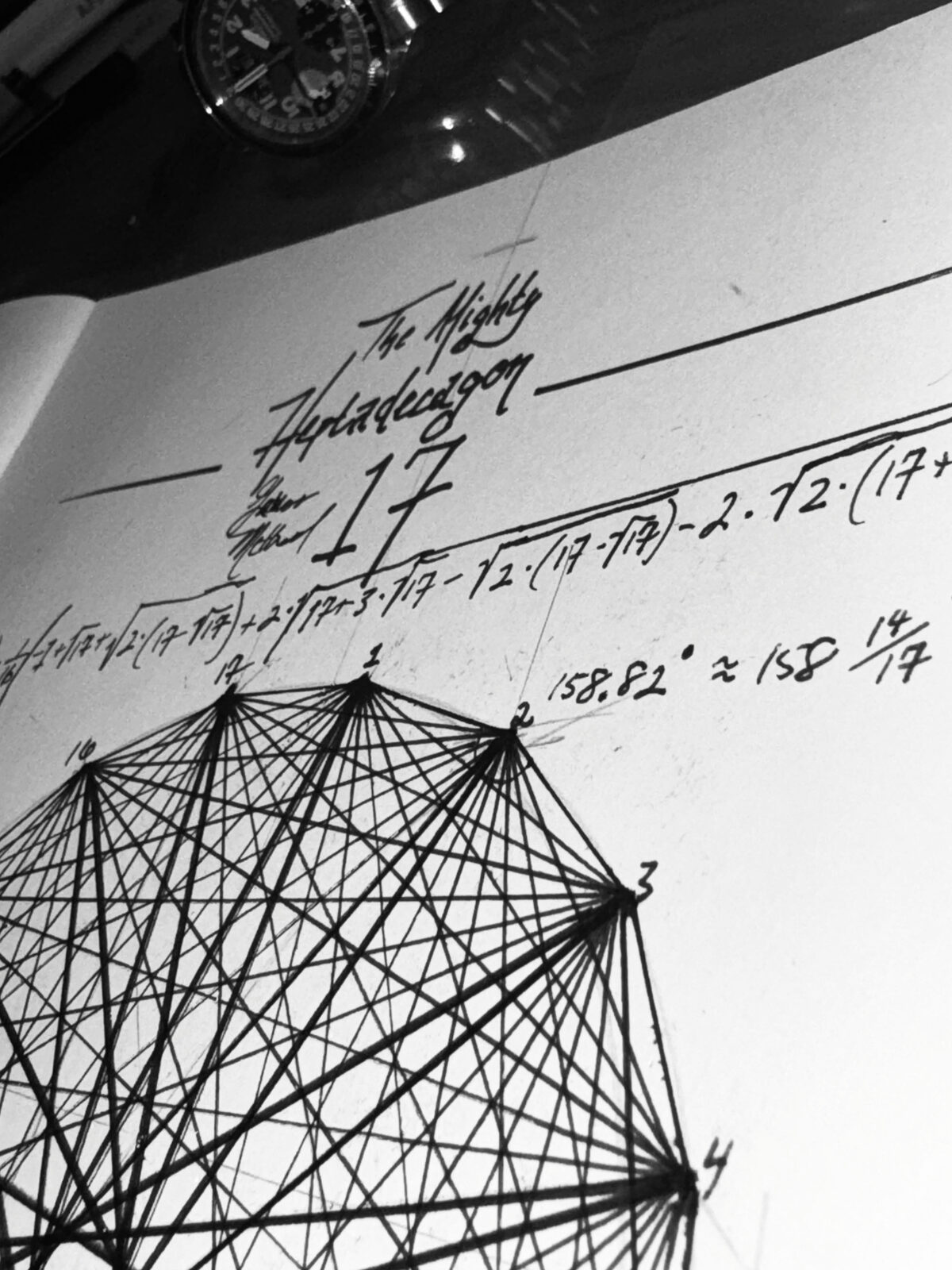
Twenty centuries of silence
The rules were set by Euclid around 300 BC, and they are brutally simple. You get two tools: a compass that draws circles and a straightedge that draws lines — an unmarked one, no ruler ticks, no protractor. Whatever shape you want must emerge purely from where circles and lines cross. The Greeks could build the equilateral triangle, the square, the pentagon, the fifteen-gon, and anything you get by doubling sides. And then — nothing. For every other prime number of sides, no one could find a way in.
For two thousand years the educated guess hardened into folklore: what the Greeks hadn't constructed probably couldn't be constructed. Nobody proved it. Nobody could. The question just sat there, polished smooth by generations of failed attempts.
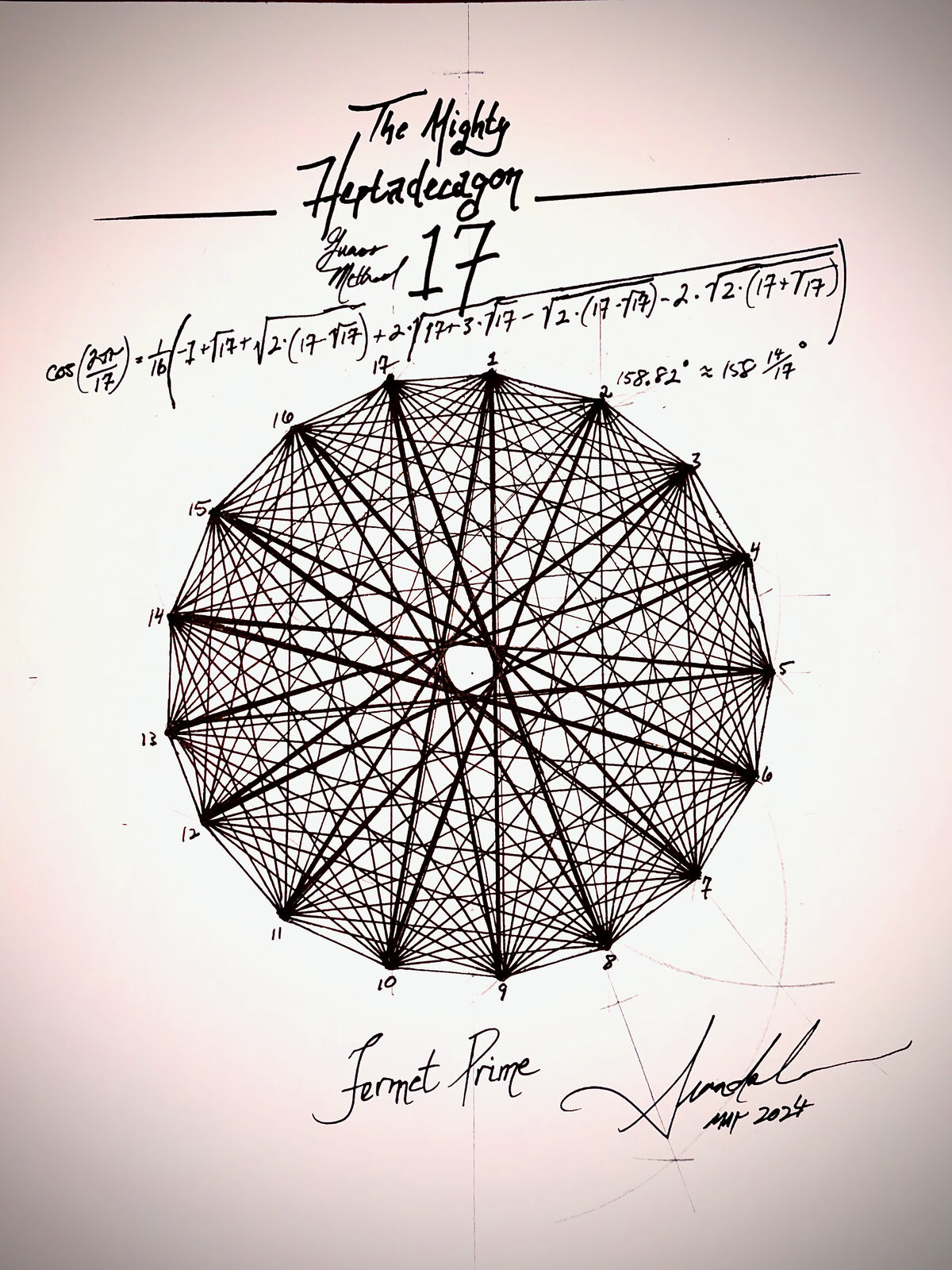
Then, on the morning of March 30, 1796, a nineteen-year-old in Braunschweig, Germany woke up early and, before getting out of bed, saw the whole structure at once. His name was Carl Friedrich Gauss, and he had not yet decided whether to become a mathematician or a philologist. That morning decided it. The regular seventeen-sided polygon could be drawn with compass and straightedge alone — and he could prove it. It became the first entry in his scientific diary, and he remained proud of it for the rest of his life: he asked for a heptadecagon on his gravestone. The stonemason reportedly refused — carved that small, seventeen sides are indistinguishable from a circle — but the monument to Gauss in Braunschweig stands on a seventeen-pointed star.
Euclid's Elements
Triangle, square, pentagon, 15-gon — and the doubling rule. The toolkit is frozen for two millennia.
Gauss, age 19
Proves the 17-gon is constructible — before he's chosen mathematics as a career. First entry in his diary.
Erchinger
The first worked compass-and-straightedge recipe, produced within a few years of the proof — reviewed by Gauss himself.
Wantzel
Proves the other half: if n isn't Gauss's kind of number, the construction is impossible. The 7-gon dies formally.
Richmond
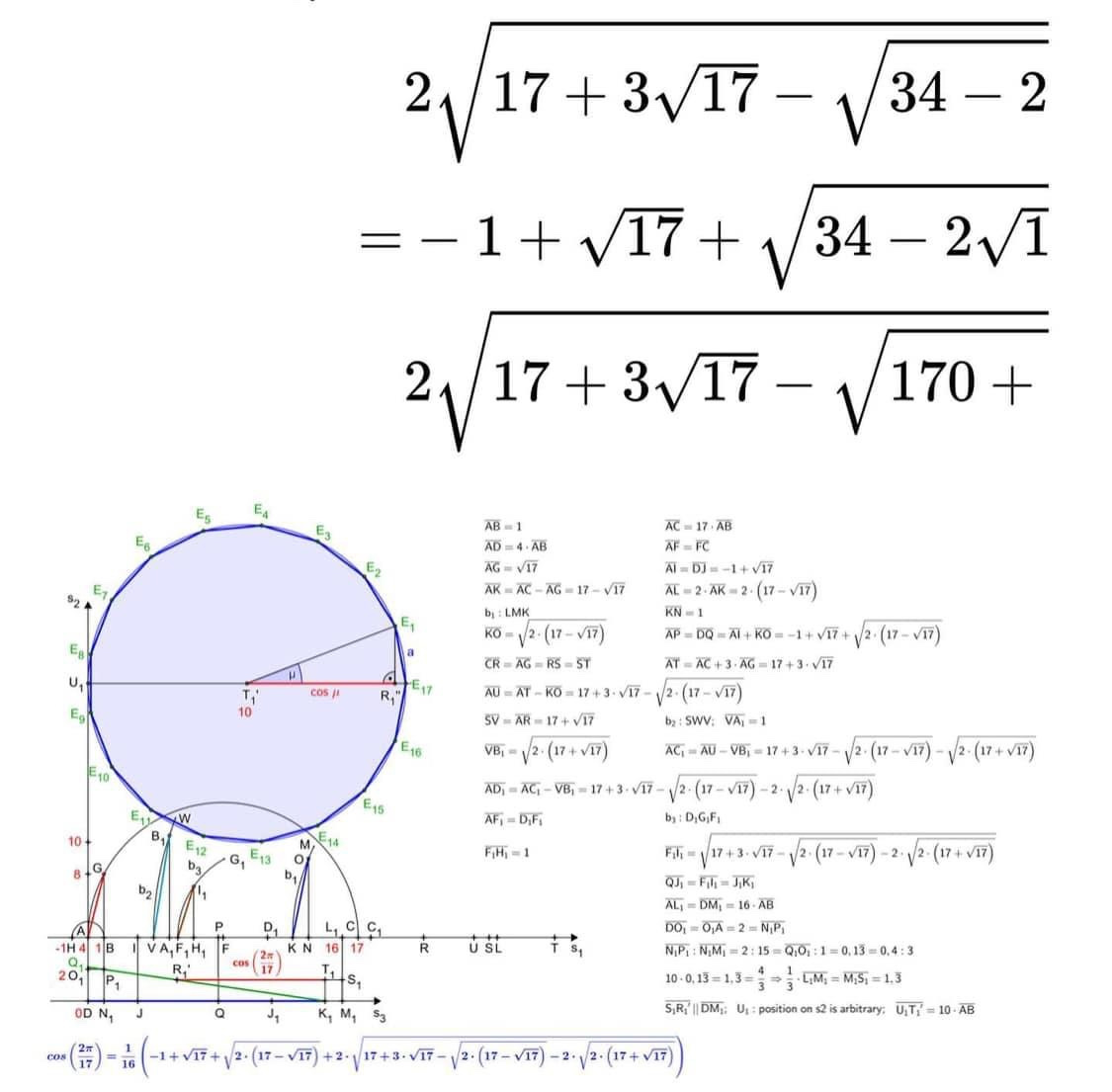
The minimal construction — the elegant version this page walks through, step by step.
This journal
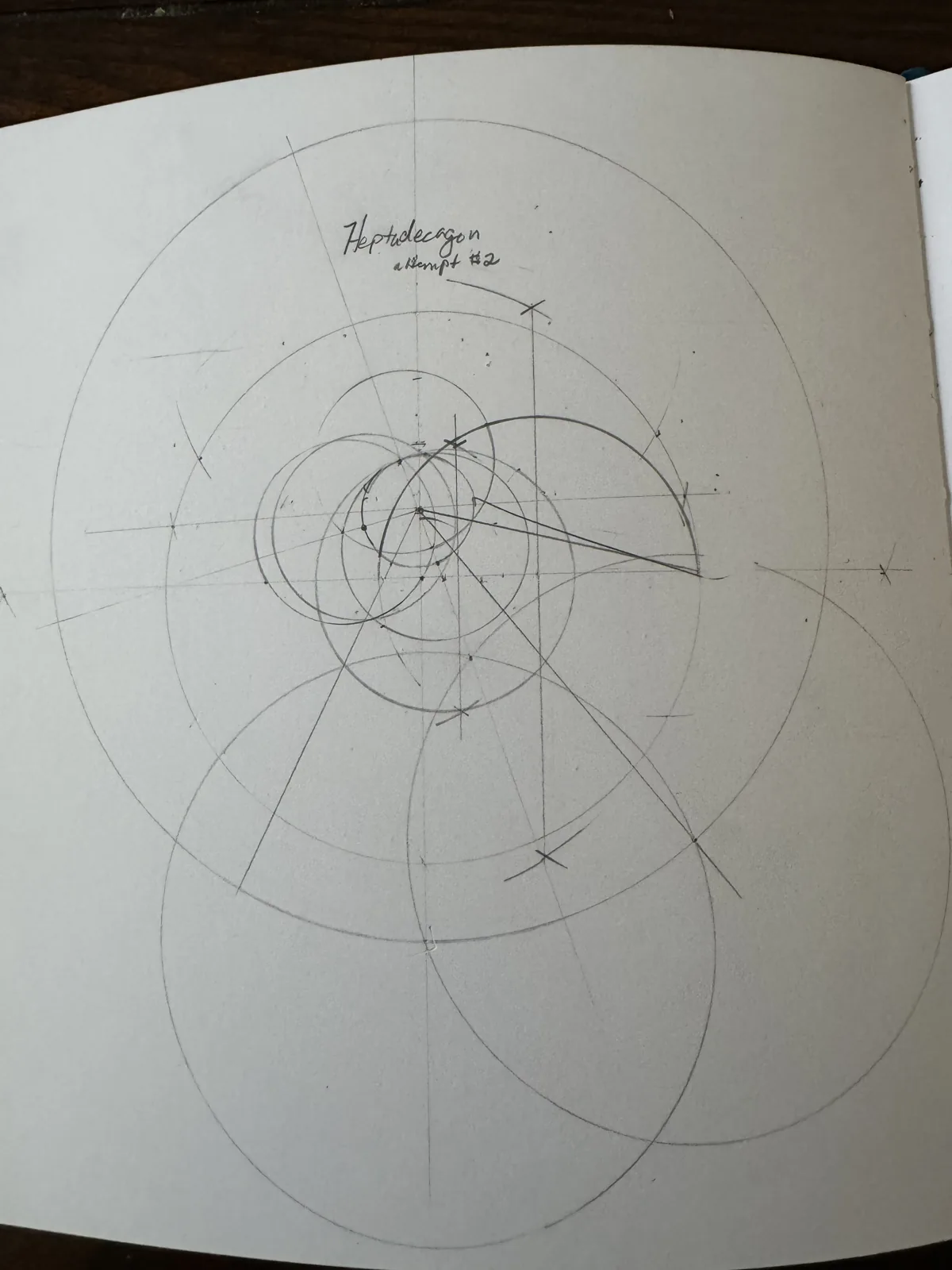
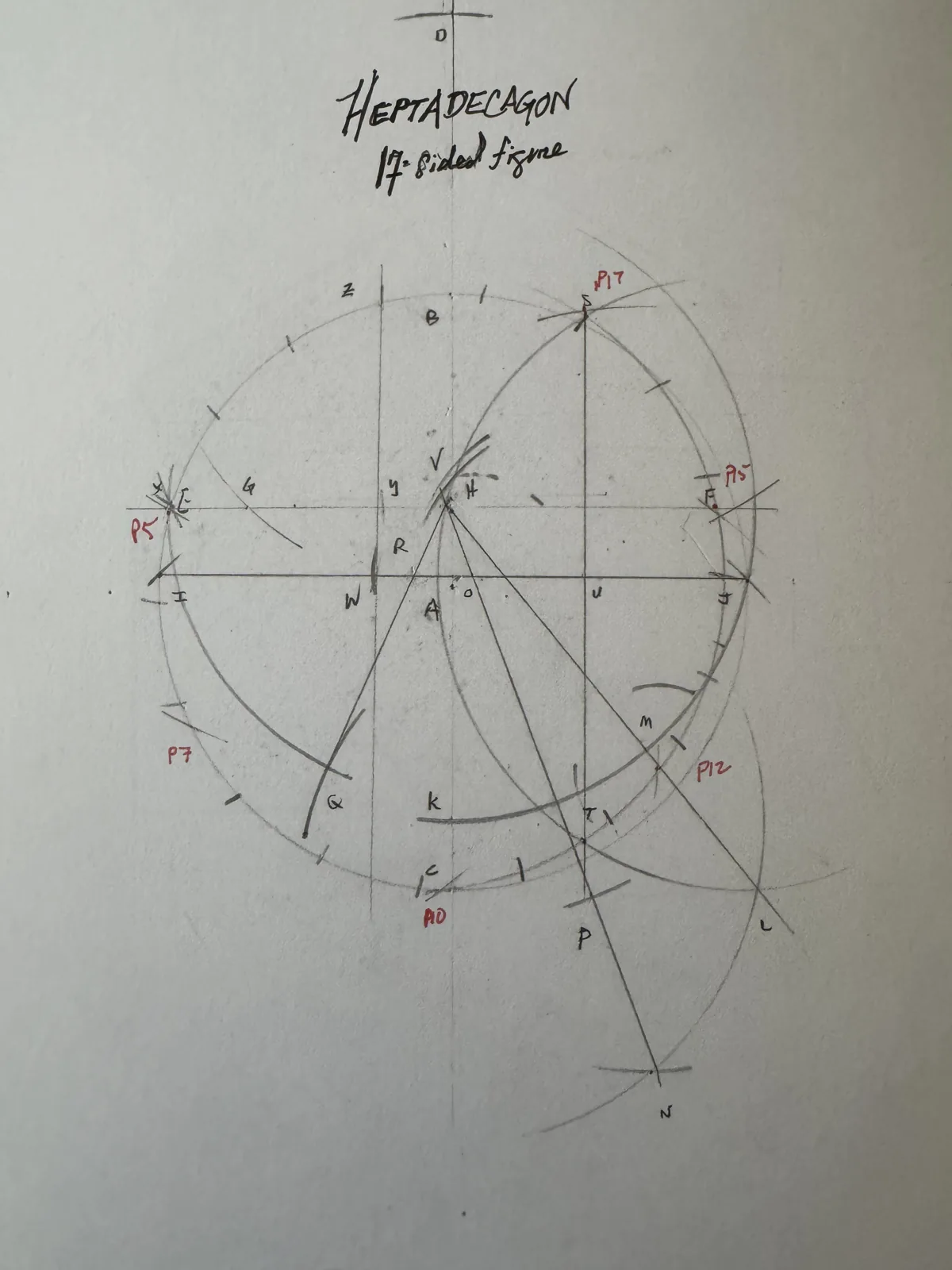
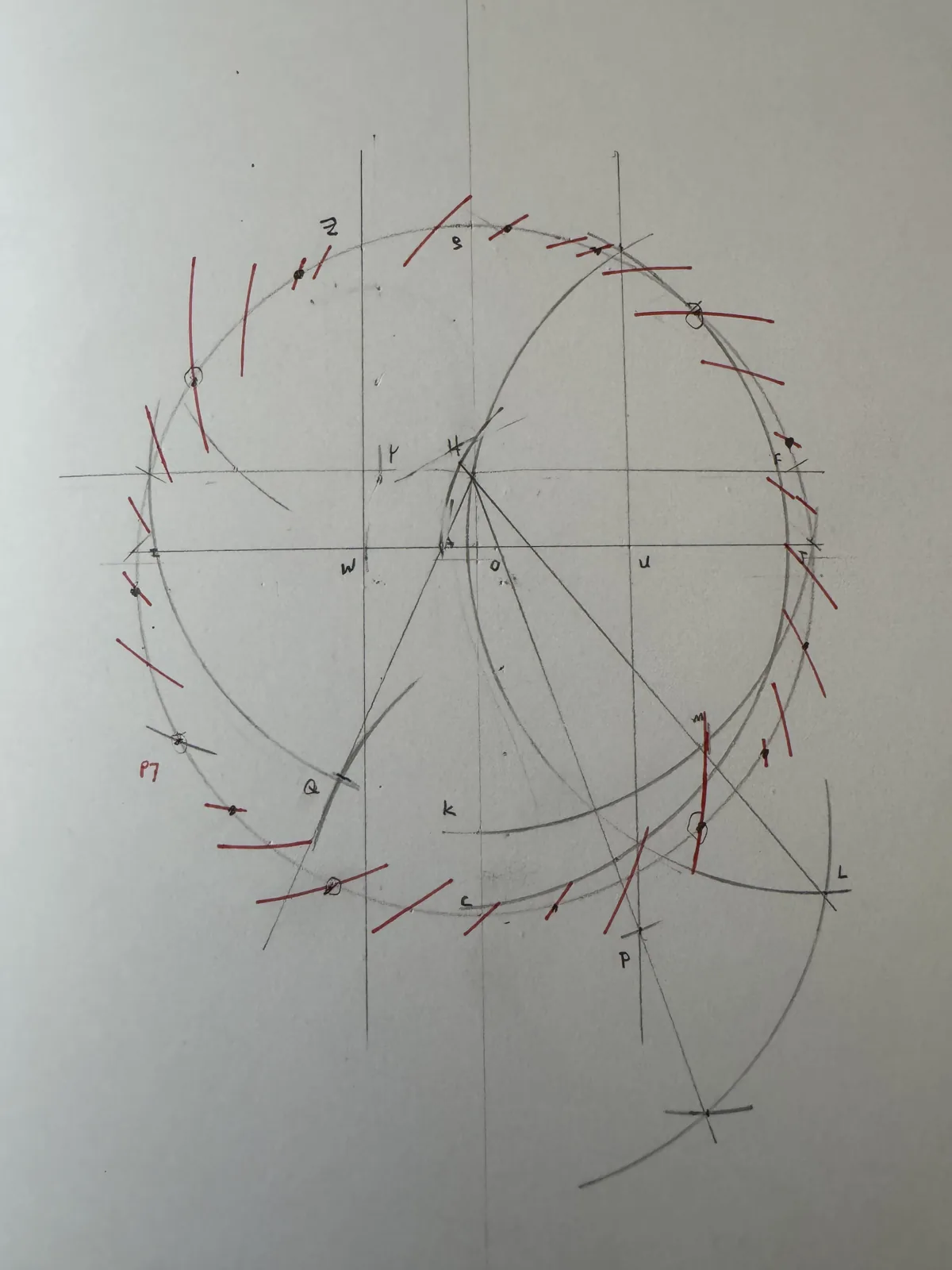
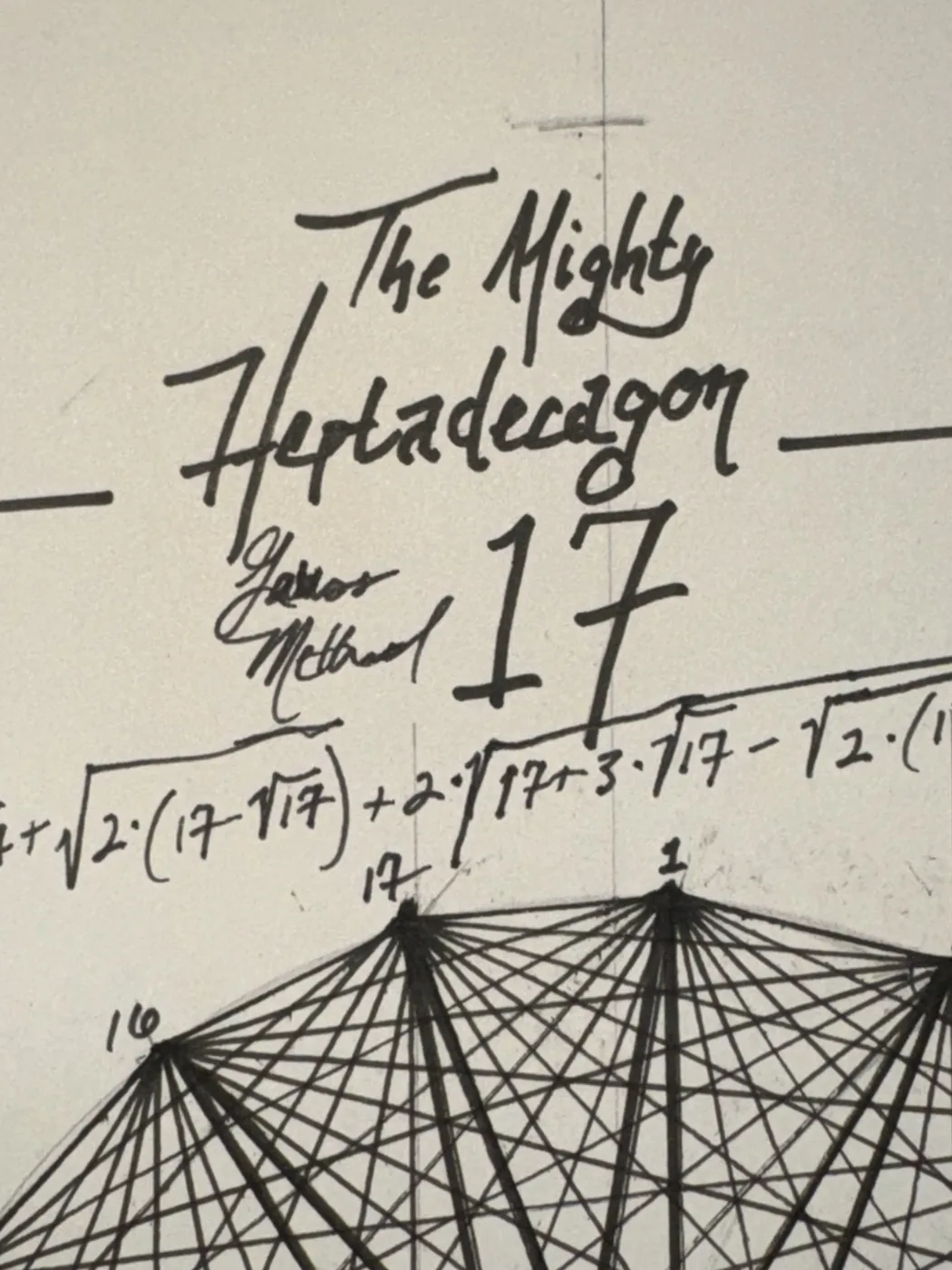
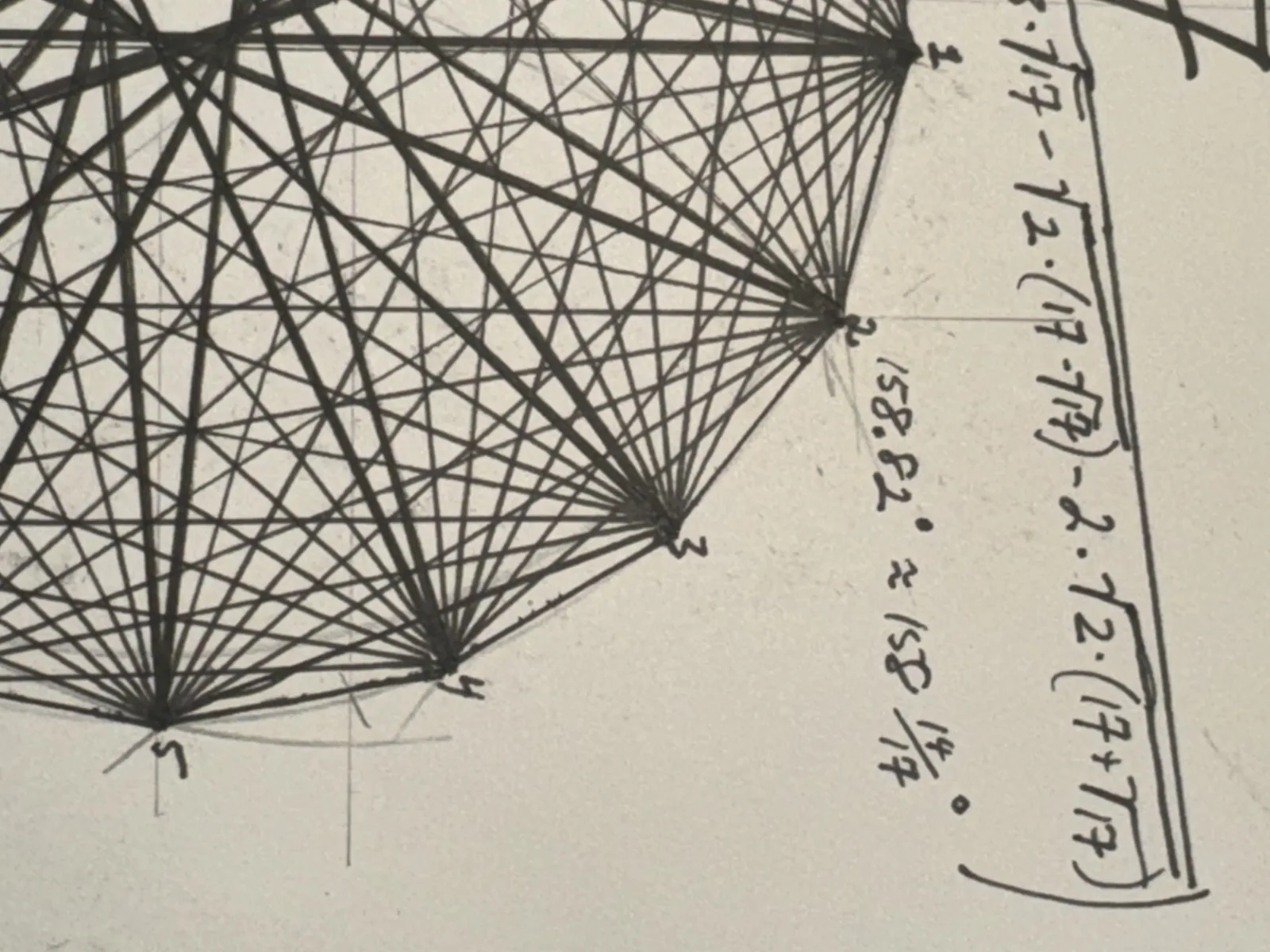
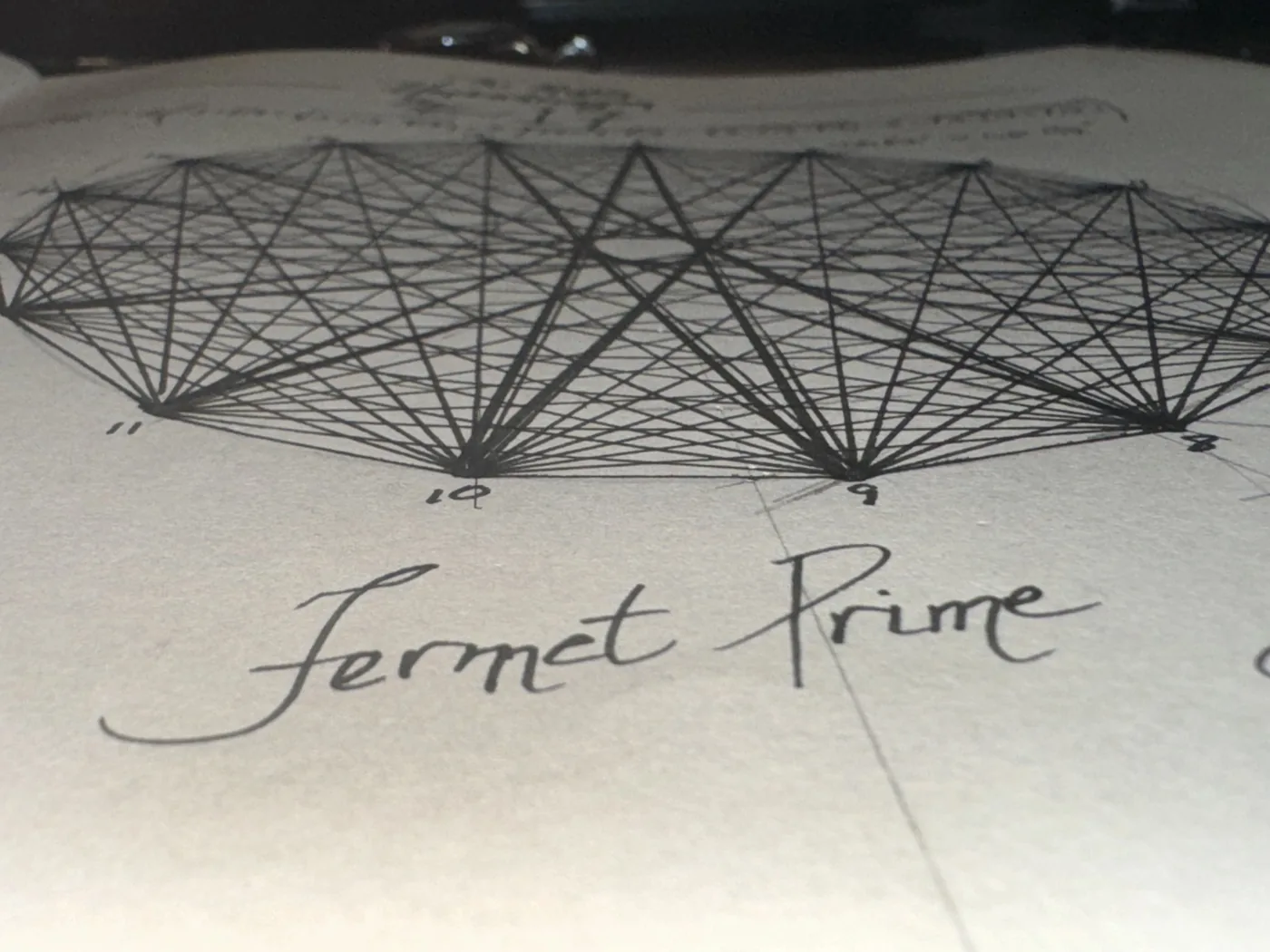
Drawn by hand, in ink, after several failed attempts — photographed below, mistakes and all.